In 2025, Fiji faced a turning point in its HIV response. Following a sharp rise in new infections, the Fijian Government declared an HIV outbreak and called for urgent international support. What followed was not just a rapid response to an emergency, but the beginning of a more coordinated, community-led approach to prevention, care and long-term system strengthening.
Health Equity Matters was honoured to work alongside Fijian partners throughout this critical year, supporting community leadership, strengthening local organisations and contributing to a nationally aligned response led by Fiji’s Ministry of Health and Medical Services.
Working in partnership, led from Fiji
Our work in Fiji is grounded in partnership. In 2025, this meant working closely with community-led organisations, government counterparts, and regional and international technical partners, each bringing different strengths to a shared goal.
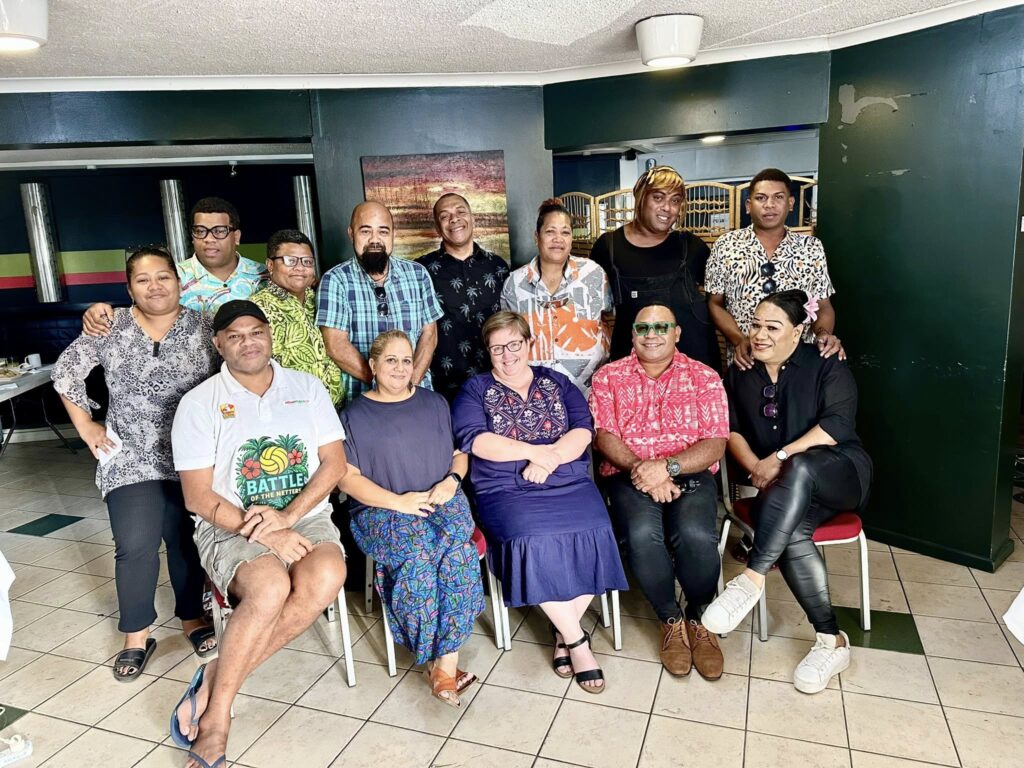
Rainbow Pride Foundation with Health Equity Matters for an organisational capacity assessment workshop.
At the heart of this work were Fijian community organisations representing populations most affected by HIV, including Rainbow Pride Foundation, Pacific Sexual and Gender Diversity Network, Fiji Network of Positive People, Strumphet Alliance Network, and Survivor Advocacy Network. Many of these organisations operate with limited resources, yet play an essential role in reaching communities, reducing stigma and supporting people to access services.
We worked in close collaboration with the Ministry of Health and Medical Services, supporting community participation in national coordination mechanisms and aligning peer-led prevention efforts with government priorities. Throughout the year, regular engagement with Ministry teams helped ensure that community-led outreach, referral pathways and data systems were connected to Fiji’s broader HIV response.
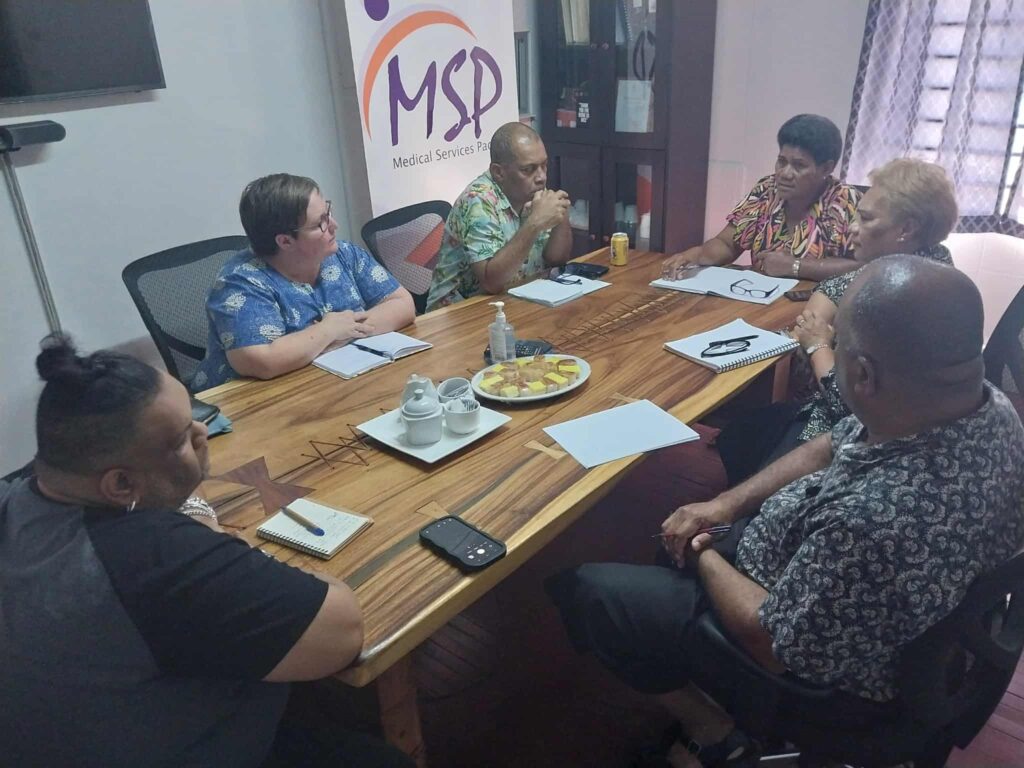
Health Equity Matters working alongside Medical Services Pacific.
Responding to urgency, without losing sight of sustainability
Health Equity Matters’ original Fiji program focused on organisational strengthening. Early in 2025, however, the scale and urgency of the outbreak demanded a rapid shift.
At the request of the Australian Government, and in response to Fiji’s call for support, our role expanded to lead the community-led prevention stream of Australia’s surge response. This work was supported by the Australian Government, including through funding delivered via UNAIDS, and was carefully integrated with our existing program.
Rather than running parallel activities, we worked with partners to bring different funding streams together into one coherent, integrated program. This approach allowed us to respond quickly, while also investing in the systems, leadership and safeguards needed for long-term impact.
Strengthening peer-led prevention across Fiji
One of the most significant achievements of 2025 was the establishment of a coordinated, peer-led HIV prevention and outreach workforce across Fiji.
Working with community partners and government stakeholders, we supported the development of a nationally aligned peer-led outreach model, grounded in lived experience and designed to work alongside clinical services. This included:
- Recruiting and supporting national and divisional community-led prevention coordinators
- Training and supporting around 50 peer outreach workers across all divisions
- Strengthening referral pathways between communities and health services
- Supporting the development of Fiji’s National Peer-Led Outreach Guidelines, providing a nationally consistent framework for peer-led outreach across organisations and funding streams.
By the end of the year, peer-led outreach was active across multiple divisions, supporting HIV prevention, testing demand and linkage to care, with communities leading the work.
Investing in organisations, not just activities
Alongside outreach, we made a deliberate investment in organisational strengthening. Experience has shown that community-led responses are only sustainable when organisations themselves are supported to thrive.
In 2025, we worked with partners to complete Organisational Capacity Assessments, develop tailored strengthening plans, and provide hands-on mentoring and support across governance, safeguarding, financial management and leadership. Importantly, this work was locally led, delivered with Fijian consultants and grounded in each organisation’s own priorities.
We also recognised the strain placed on organisations during a year of crisis response and leadership transition. To help stabilise partners during this period, Health Equity Matters supported core leadership roles within Rainbow Pride Foundation and Fiji Network of Positive People, ensuring organisations could manage increased responsibilities while continuing to build for the future.
Supporting national coordination and community voice
Strong responses require strong coordination. Throughout 2025, we supported community engagement in Fiji’s national HIV coordination mechanisms, including the HIV Taskforce and its Prevention Sub-Committee.
This included practical secretariat support, strengthening terms of reference and ensuring community participation was meaningful and properly resourced. We also worked closely with Australian consortium partners and technical agencies to reduce duplication and support coherent action under surge conditions.
Looking ahead
2025 was a year of complexity, adaptation, and learning. It was also a year of remarkable collaboration, marked by trust, honesty and a shared commitment to strengthening Fiji’s HIV response in ways that are locally led and sustainable.
By the end of the year, peer-led outreach was operating nationally, organisational strengthening was underway across multiple partners, and community voices were more firmly embedded in national systems. These foundations position Fiji well for the next phase of work.
Health Equity Matters remains deeply committed to walking alongside our Fijian partners as this work continues, supporting community leadership, strengthening systems and contributing to an HIV response that is effective, inclusive and resilient.
This work in Fiji is supported by the Australian Government, including through funding delivered via UNAIDS, and is undertaken in close partnership with the Ministry of Health and Medical Services and Fijian community-led organisations.
